


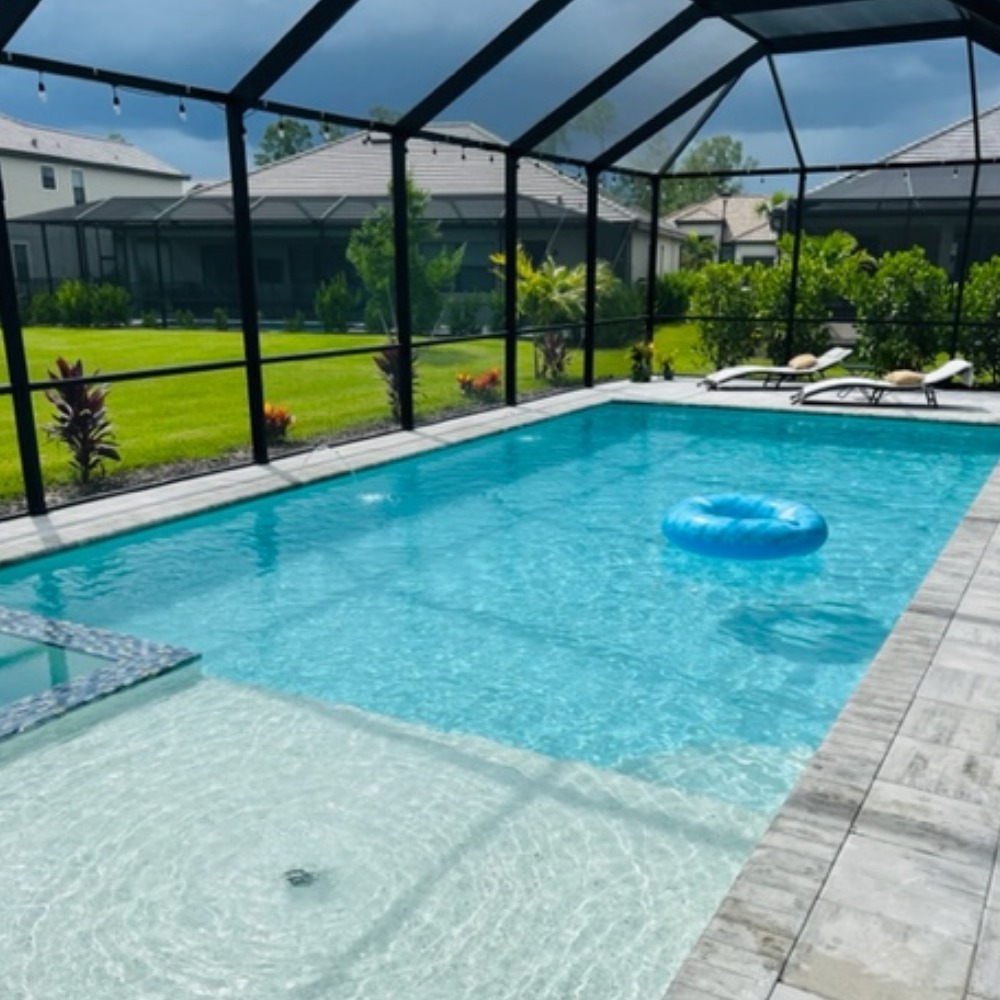
The short answer: maybe more than you’d expect.
Most people moving to Fort Myers or Cape Coral assume that if you’re in Florida, your pool is warm enough year round without any pool heater. For roughly eight months of the year, that’s true. But from mid November through late March, SWFL evening air temperatures regularly drop into the 50s and occasionally the low 40s. Pool water cools slowly, but it does cool, and by January, a pool in Fort Myers without a pool heater can sit in the low to mid 60s°F. That’s cold enough to make most adults hesitant to swim and children downright unwilling.
Whether a pool heater is worth the investment depends entirely on how you use your pool. This post is meant to help you make that call honestly, including the cases where a heater might not be right for your situation.
What SWFL Winter Pool Temperatures Actually Look Like
Water temperature lags behind air temperature, which means your pool stays warmer than the air on cold nights but cools gradually over the course of a cool week. SWFL doesn’t usually experience hard freezes, but extended cool spells in December, January, and February can pull ambient temperatures into the 40s°F for several nights in a row.
The result: a pool without a pool heater in Fort Myers typically sits in the following ranges during winter months (these are general climate based estimates for the region, not published station data, actual pool temps vary by exposure, depth, pool cover use, and wind):
| Month | Approximate Unheated Pool Temp Range |
|---|---|
| November | Low 70s to upper 70s°F |
| December | Mid to upper 60s°F |
| January | Low to mid 60s°F |
| February | Mid 60s°F |
| March | Upper 60s to low 70s°F |
Most adults find pool water comfortable for extended swimming at 78-82°F. Below 70°F, casual swimming drops off sharply. Below 65°F, it’s mostly the dedicated swimmers and kids who won’t admit they’re cold.
The “shoulder season” window, November and March, is where a pool heater makes a particularly clear difference. Water temps in the upper 60s to low 70s are right at the edge of comfortable. A heater pulling those temperatures up to 80°F can extend your usable swim season by several months on each end.
Need a pro to look at your equipment?
Our licensed team repairs and installs pool pumps, filters, heaters, salt systems and automation across Fort Myers, Cape Coral and Lee County, and we never start a repair without your approval. Licensed CPC 1459893.
Pool repair in Fort Myers → · Salt water conversion → · Call (239) 216-0600
Who Benefits Most From a Pool Heater in SWFL?
A pool heater is more likely to be worth the investment if any of these apply:
- You entertain regularly and want the pool to be comfortable for guests from October through April. Unheated pools in this period are a social limitation, guests who’ve traveled to see your pool in winter often find it too cold to enjoy.
- You have young children or grandchildren who visit seasonally. Kids’ comfort threshold for pool temperature is actually higher than adults’, not lower, they’ll tell you it’s fine and then shiver their way out after ten minutes.
- You use the pool for fitness or lap swimming. Consistent water temperature matters for regular exercise routines.
- You’re renting the property. A heated pool is a standard expectation in the vacation rental market and typically commands higher rates during winter season.
- You’re a year round swimmer who doesn’t want any cold weather interruption. If the pool is central to your daily routine, the question isn’t whether to heat, it’s which type of pool heater fits best.
A pool heater may not be the right investment if you primarily use the pool from April through October (water is naturally comfortable throughout that period), rarely swim in the evening during winter months, and aren’t concerned about the November, March window. In that case, a quality solar cover can help retain heat between day and night with no operating cost, and may be sufficient for your use pattern.
The Three Types of Pool Heaters for SWFL
Each pool heater technology works differently, and the best choice depends on your priorities, pool size, existing gas availability, and how you use the pool. Here’s an honest breakdown of each.
Heat Pump Pool Heaters
A heat pump pool heater is the most common choice for SWFL homeowners investing in pool heating, and for good reason: heat pump pool heaters are designed for climates where the ambient air temperature stays above roughly 50°F for most of the year, which describes SWFL even in winter. This category is sometimes called an electric pool heater because it runs on electricity, but it works very differently from electric resistance heating.
How they work: A heat pump pool heater doesn’t generate heat. It moves heat from the surrounding air into the pool water using a refrigerant cycle, similar to how a central air conditioner works in reverse. Because it’s transferring existing heat rather than creating it, it uses significantly less electricity per BTU of heating than electric resistance heating.
SWFL advantages:
- Efficient across SWFL’s mild winters, performance doesn’t drop off the way it would in a northern state
- Lower operating costs compared to gas heaters over a full season (specific savings depend on your electricity rate and usage pattern, we don’t publish a number here)
- Long service life with proper maintenance
- No need for natural gas or propane
Limitations:
- Heats water slowly, a heat pump pool heater will raise pool temperature by roughly 1-3°F per hour depending on size. This means it’s best managed as a background system, not a “heat on demand” option for tonight’s party
- Higher upfront equipment cost than most gas heaters
- Performance declines in very cold weather (below 50°F ambient), which rarely happens in SWFL but can limit effectiveness during the coldest winter nights
Best for: SWFL homeowners who want efficient, lower cost pool heating for the full winter season and are willing to plan ahead.
Gas Pool Heaters (Natural Gas or Propane Pool Heater)
A gas pool heater generates heat by burning fuel, making it the fastest heating option available. They can raise pool temperature several degrees per hour, much faster than a heat pump pool heater. In parts of Lee County without natural gas lines, a propane pool heater serves the same function with the same speed advantage, but requires on site propane storage.
SWFL advantages:
- Fast heat up time, useful if you want the pool warm for a specific event
- Performance unaffected by ambient air temperature (a gas or propane pool heater heats just as effectively on a 45°F January night as any other time)
- Lower upfront equipment cost compared to heat pumps
Limitations:
- Higher operating costs than heat pump pool heaters over a full season, gas prices vary, but fuel generated heat is inherently more expensive per BTU than air sourced heat
- Natural gas availability varies in Lee County, some areas rely on propane, which adds a tank and delivery logistics
- Heat exchangers in gas pool heaters are vulnerable to corrosion from low pH pool water, a real risk in SWFL where water chemistry can drift quickly (see our post on how often to service your pool for why chemistry maintenance matters for equipment longevity)
- Shorter typical service life than heat pumps under continuous SWFL use
Best for: Pools with a specific “event driven” heating need, or where natural gas is readily available and speed of heat up matters more than seasonal operating cost.
Solar Pool Heaters
A solar pool heater uses roof mounted panels (typically dark plastic or rubber collectors, not photovoltaic solar) to circulate pool water through the collectors where it absorbs heat from the sun before returning to the pool. Florida’s sun exposure makes solar a legitimate pool heater option.
SWFL advantages:
- Low operating cost once installed, no fuel, minimal electricity for the pump
- Florida’s sun is one of the best environments in the country for solar pool heating
- Long system lifespan with proper maintenance
- No utility bill impact for the heating itself
Limitations:
- A solar pool heater heats only when the sun is out, solar systems don’t store heat, so they can’t help with cold evenings or overcast stretches
- SWFL’s mild but real winters mean overcast cool spells (which often coincide with when you want the pool warmer) are exactly when solar underperforms
- Requires adequate unshaded roof space oriented correctly, not all SWFL homes have the right roof layout
- Less effective during SWFL’s rainy season cloud cover
Best for: Homeowners who want to take the edge off shoulder season temperatures (November, March), have appropriate roof space, and understand the system’s weather dependent limitations.
Comparing Pool Heater Options for SWFL
Pool heater cost varies significantly by type, unit size, and installation complexity. The table below uses general industry estimates, we provide written quotes for specific configurations before any work begins.
| Factor | Heat Pump Pool Heater | Gas / Propane Pool Heater | Solar Pool Heater |
|---|---|---|---|
| Upfront cost | Higher | Moderate | Moderate, Higher (installed) |
| Operating cost | Lower | Higher | Very low |
| Heating speed | Slow (1-3°F/hr) | Fast (several °F/hr) | Slow (weather dependent) |
| Cold night performance | Good (SWFL winters) | Excellent | Poor |
| Best use case | Full season, planned heating | Event driven or fast heat | Shoulder season assist |
| Lifespan (SWFL) | 10-15 years (typical) | 8-12 years (typical) | 15-20 years (panels) |
These are general industry estimates. Actual pool heater cost, installation, and operating costs vary by unit size, brand, site conditions, and fuel/utility rates. Contact us before drawing conclusions from any published number.
What About Pool Covers?
A quality solar cover (bubble cover) or automatic cover retains heat overnight and significantly slows the rate at which a pool without a pool heater loses temperature. In the shoulder season (November, early March), a cover used consistently can keep an unheated pool 8-12°F warmer than an uncovered pool overnight, a meaningful difference.
If your winter pool use is limited and budget is a consideration, starting with a cover before investing in a pool heater is a reasonable approach. For pools that need reliable heating across multiple cold months, a cover becomes a useful complement to a pool heater rather than a substitute.
Pool Heater Installation and Your Equipment
One thing worth knowing before any pool heater installation: your existing equipment matters. Undersized pumps may not move water at the flow rate a heat pump or gas pool heater requires for proper operation. Old plumbing or equipment in poor condition may not be compatible with a new pool heater installation. This is one reason a professional assessment before purchase matters, sizing the pool heater correctly to your pool volume and ensuring your circulation system can support it avoids problems after pool heater installation.
If your pool equipment is already showing wear, it’s worth reviewing whether any components need attention at the same time. Our post on pool equipment repair vs. replacement covers how to think through that decision, and our pool inspection service gives you a documented equipment condition report before you commit to any investment.
For pool heater repair on existing units, whether that’s an igniter replacement on a gas heater, refrigerant service on a heat pump, or a control board swap, our team handles pool heater repair across the full SWFL service area. If pool heater repair isn’t economical given the unit’s age, we’ll tell you that honestly and scope the replacement alongside it.
When you’re ready, our pool heating service page covers what we install and service, and our equipment installation and upgrades team handles the full project from sizing through commissioning.
FAQ: Pool Heater Options in Southwest Florida
Q: Is a pool heater worth it in Fort Myers if we only visit in winter?
A: For a seasonal home used primarily November, March, a pool heater almost always pays for itself in usability. Without one, the pool may be too cold to enjoy comfortably during much of the winter visit window. The question is which type makes sense for your access pattern, a heat pump pool heater is most cost efficient but requires planning ahead; a gas or propane pool heater heats faster if visits are irregular.
Q: How much does a pool heater cost in SWFL, installed?
A: Pool heater cost varies significantly by type and unit size. As a general reference: heat pump pool heaters tend to have higher equipment cost but lower operating cost; gas and propane pool heaters have lower equipment cost but higher fuel costs over a season; solar pool heaters fall in the middle for equipment cost with very low operating cost. We provide written estimates for specific configurations, contact us before budgeting based on any published number.
Q: What temperature should I set my pool heater to in SWFL winter?
A: Most households target 80-82°F for comfortable recreational swimming. Setting the pool heater higher than necessary increases operating costs without meaningful comfort benefit. A thermostat that can be programmed to lower the temperature when the pool isn’t in use (overnight, during travel) helps manage costs.
Q: Can I heat my pool with solar panels (photovoltaic/PV) instead?
A: Standard photovoltaic solar panels generate electricity, which can power a heat pump pool heater or other electrical equipment, but are not themselves a pool heater. A solar pool heater uses dedicated thermal collectors (typically dark plastic or rubber panels) that directly heat pool water. These are different systems. If you have existing PV solar on your home, that electricity can offset the operating cost of a heat pump pool heater, worth discussing with both your solar and pool service providers.
Q: How long does it take to heat a pool from cold?
A: A heat pump pool heater heating a cold SWFL winter pool (low 60s°F) to 80°F may take 24-48 hours for a typical residential pool, depending on the BTU rating and pool volume. A gas pool heater is faster. Plan ahead rather than expecting to heat on demand for a same day event.
Q: Does a pool heater affect chemical consumption?
A: Warmer water increases chlorine consumption and can accelerate some chemical reactions. Pools heated to 80°F+ require slightly more attention to sanitizer levels and pH than unheated pools at the same time of year. This is another reason consistent weekly pool service matters, your technician can adjust dosing for the temperature, and can also catch early signs of pool heater repair needs before they become failures.
Q: Where can I find pool heater repair near me in SWFL?
A: Liquid Concepts handles pool heater repair across Fort Myers, Cape Coral, Bonita Springs, Estero, Lehigh Acres, and North Fort Myers. Call (239) 216-0600 or reach out online.
Thinking About a Pool Heater? Let’s Talk Through Your Options.
Liquid Concepts Pool Service installs, services, and repairs pool heaters throughout Fort Myers, Cape Coral, Bonita Springs, Estero, Lehigh Acres, and North Fort Myers.
We’ll assess your pool, your circulation system, and your use pattern, and give you a written estimate for the options that actually fit your situation. No pressure toward the most expensive system, and no one size fits all recommendation. That’s how we’ve operated for 60+ years of combined experience in SWFL pools.
FL Certified Pool/Spa Contractor #CPC 1459893.
Call us at (239) 216-0600 or reach out online to schedule a consultation.
Explore our pool heating service page for more on what we install and service. If you’re also evaluating other equipment upgrades alongside pool heater installation, our equipment installation and upgrades and new equipment sales pages cover the full scope of what we offer. And if you want to understand how pool heating fits into overall equipment health, our post on how often to service your pool in SWFL is a useful read, warm pools need consistent weekly maintenance service even more than cool ones.
Need a pro to look at your equipment?
Our licensed team repairs and installs pool pumps, filters, heaters, salt systems and automation across Fort Myers, Cape Coral and Lee County, and we never start a repair without your approval. Licensed CPC 1459893.
Pool repair in Fort Myers → · Salt water conversion → · Call (239) 216-0600