


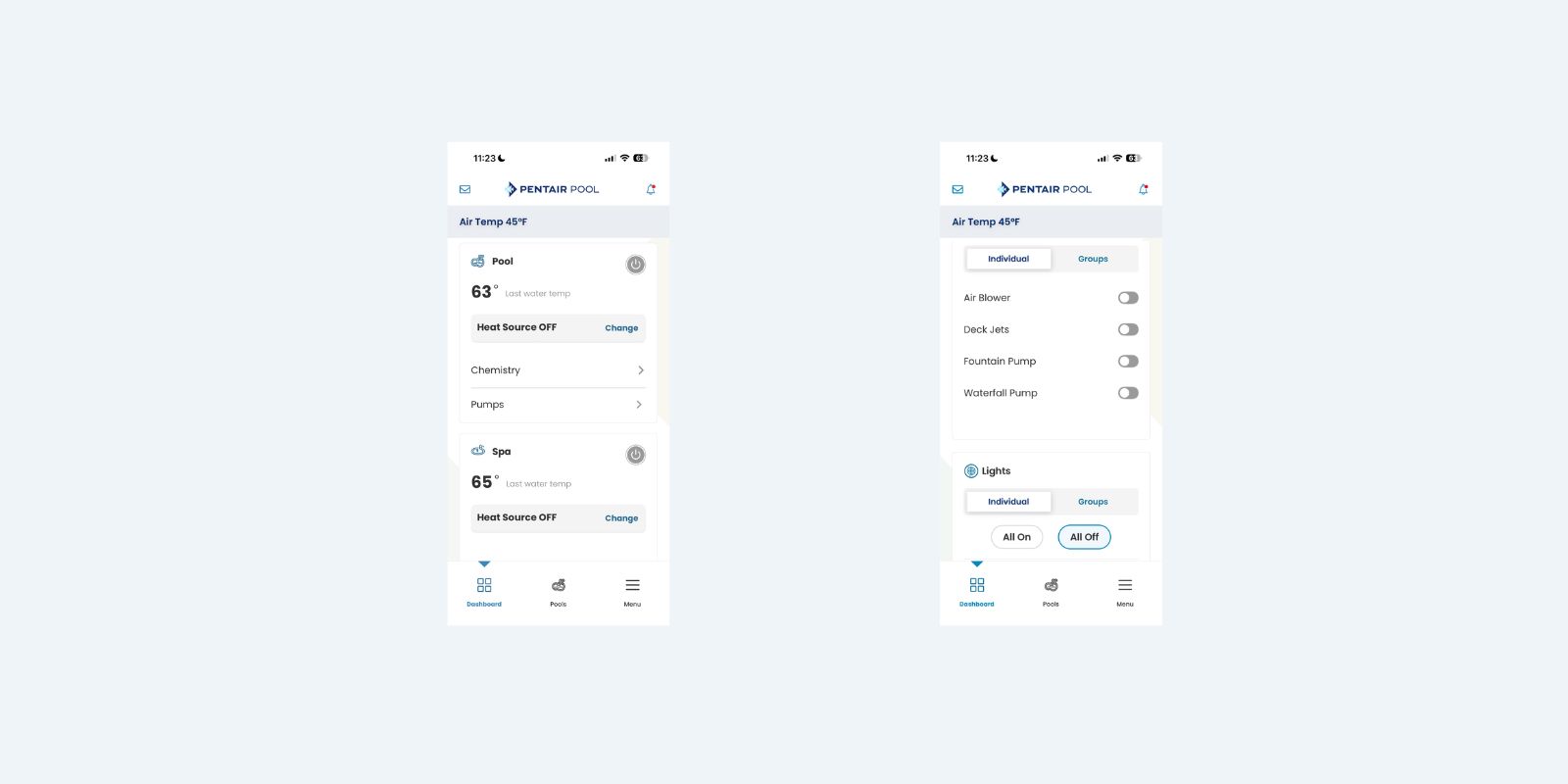
TL;DR: Pool automation puts your pump, heater, salt system, lights, and valves on one controller you can run from your phone. It is genuinely worth it if you have a heater, a variable speed pump, or you are away from the house for part of the year. It is a weaker investment on a simple pool with a single speed pump and no heat. A smart pool controller does not test your water and does not clean your pool, so it reduces trips to the equipment pad, not the need for service.
Automation is the upgrade pool owners ask us about most and the one with the widest gap between what it is sold as and what it actually does. This guide covers what a pool automation system controls, what it costs to add to an existing pool, where it pays off in Southwest Florida specifically, and the parts that get oversold. If the honest answer for your pool is no, we would rather say so before you spend the money.
What is a pool automation system, and what does it control?
A pool automation system is a central controller, plus an app, that operates the equipment on your pad on a schedule or on demand. It typically controls pump speed, heater set point, salt chlorine generator output, lights, and motorized valves for spa and water feature switching. One panel replaces a row of timers and manual valves.
The pool automation controller is the hub. Everything else is either a device it talks to or an actuator it drives. What you actually get depends on how many of those devices exist on your pad already, which is why two quotes for “automation” on two similar looking pools can be very different.
Here is a realistic priority order, because you do not have to automate everything at once:
| Automate | What it unlocks | Notes |
|---|---|---|
| Pump | Speed schedules, storm shutdown, remote restart | Highest value if you have a variable speed pump |
| Heater | Set point control from the app, seasonal scheduling | Where most of the comfort value sits in SWFL |
| Salt system | Output adjustment without walking to the pad | Useful when demand swings between seasons |
| Lights | Scheduling, color scenes, no more timers | Needs compatible LED fixtures for color control |
| Valve actuators | Spa mode, water features, automatic switching | Adds hardware and labor, so cost rises here |
| Chemistry sensors | Automated pH and chlorine dosing | Separate add on system, not standard automation |
Most residential quotes cover the first three or four rows. The bottom two are where budgets grow.
Are pool automation systems worth it?
Automation is worth it when you have equipment that benefits from scheduling: a variable speed pump, a heater, a salt system, or a spa. It is worth it if you spend part of the year away from the property. On a basic pool with a single speed pump, no heater, and no spa, there is little for a controller to optimise and the payback is thin.
The value is real but it is specific. Three cases where we recommend it without hesitation:
You have a variable speed pump. Scheduling is where variable speed pumps actually earn their premium, and automation is what makes multi speed schedules practical instead of theoretical. Our post on whether a variable speed pool pump is worth it in Fort Myers covers the pump side of that pairing, and how long to run your pool pump in SWFL covers the run times you would be programming.
You have a heater. Heater scheduling from an app is the single feature owners use most. Being able to bring a pool up to temperature on the drive home, rather than heating it all week, is both a comfort and a cost argument. See do you need a pool heater in SWFL if you have not added one yet.
You are not always here. More on this below, because in this market it is the strongest case of all.
And one case where we will talk you out of it: a small pool, a single speed pump, no heat, no spa, and an owner who is home year round. There is not enough for the controller to do.
The Southwest Florida case: seasonal residents and storm season
Most automation content online is written for a general audience. Two things about this market change the maths, and neither is covered by the national guides.
Seasonal residents. A large share of pools in Fort Myers, Cape Coral, Estero, and Bonita Springs sit at houses that are occupied part of the year. A pool remote control setup means you can see that the pump is running, adjust a schedule, and warm the pool before you arrive, from another state. It also means a caretaker or a service company can be told exactly what the system is doing rather than guessing. For an absentee owner, remote visibility is worth more than any convenience feature.
Storm season. From June through November, being able to shut the pad down remotely before a storm and bring it back up afterward is genuinely useful. Automation does not protect your equipment on its own, and it is not a substitute for proper preparation, which our guide to hurricane season pool prep in Fort Myers covers in full. What it does give you is control and visibility when you are not standing next to the equipment.
Winter heating. Our cool months are exactly when heater scheduling matters, and they coincide with peak occupancy for seasonal residents. A pool heating system on a schedule is a different experience from one on a manual thermostat.
Neither of these appears in the automation buyer’s guides that currently rank for this topic, which are written from other parts of the country.
How much does it cost to automate a pool?
Cost depends on three things: how many devices the controller has to talk to, whether your existing equipment is compatible or needs replacing, and how many motorized valve actuators the layout requires. A pool with a recent variable speed pump, salt system, and heater from one manufacturer costs far less to automate than a pad of mixed age equipment.
We do not publish a number, because a fair quote requires seeing the pad. What we can tell you is what moves the price:
- Existing equipment brand and age. Newer equipment from one family often communicates with the controller directly. Older equipment may need relays, or may not integrate at all.
- Valve actuators. Each motorized valve is hardware plus labor. Spa and water feature switching is the usual reason for several.
- Electrical work. Some installations require a subpanel or circuit work, which brings in an electrician.
- Whether anything needs replacing anyway. If your pump or heater is near end of life, replacing it with a compatible unit as part of the project is usually cheaper than automating around it and replacing it next year. Our post on pool equipment repair vs replacement covers how we make that assessment.
If you would rather see the whole pad documented before spending anything, a pool inspection gives you a written condition report of what you have, which is the right starting point for any automation quote.
Can you add pool automation to an existing pool?
Yes. Pool automation installation on an existing pool is routine, and does not require rebuilding the pool or the plumbing. The controller mounts at the equipment pad, wires into the existing circuits, and connects to compatible devices. The variables are whether your current equipment can be controlled and how many valves need actuators fitted.
Retrofit is actually the normal case, not the exception. What we look at on a site visit:
- Pump type. Variable speed pumps from the last several years usually integrate cleanly. Single speed pumps can be switched on and off but not modulated.
- Heater compatibility. Most modern heaters accept an external control signal. Older units may only support on and off.
- Salt system generation. Newer cells and controllers integrate; older units may need replacing to be controllable.
- Valve positions. How many manual valves you currently turn by hand tells us how many actuators the quote will include.
- Panel capacity and WiFi coverage. The pad needs both power capacity and a usable signal, and coverage at an outdoor pad is a real constraint on some properties.
Our equipment installation and upgrades page covers this work, and the pool automation systems page has the systems we install.
What pool automation does not do
This is the section the manufacturer pages leave out. Automation controls equipment. It does not maintain a pool.
It does not test your water. Standard automation has no idea what your chlorine, pH, or alkalinity are. Pool chemical automation is a separate add on: sensors plus a dosing system, at meaningful additional cost, and it still needs periodic calibration and verification against a real test. Without it, your controller will happily run a perfect schedule on a pool that is out of balance. Our pool alkalinity guide explains why that balance is the part that actually protects your surfaces and equipment.
It does not clean. No controller skims leaves, brushes a waterline, empties a skimmer basket, or cleans a filter. Automation reduces trips to the pad. It does not reduce the physical work of pool care, which is what weekly pool service is for.
It does not diagnose. A controller may report a fault code. Knowing whether that fault is a scaled salt cell, a failing pump bearing, or a leak is still a person’s job. Our post on signs your pool is leaking covers symptoms no controller will catch.
We say this up front because automation gets sold as a labor replacement and it is not one. It is a control and visibility upgrade, and on those terms it is a good one.
Which pool automation system is best?
The best pool automation system is almost always the one that matches the equipment you already own. Pentair pool automation pairs most cleanly with Pentair pumps, heaters, and salt cells, and the same brand logic applies across the major manufacturers. Cross brand control is possible but adds relays, complexity, and failure points.
So the choosing sequence is not “which brand is best”, it is:
- What brand is your pump, heater, and salt system? Start there.
- How many devices need real control, as opposed to simple on and off?
- How is the app, and does it matter to you whether it works with your smart home setup?
- Who supports it locally? A smart pool controller you cannot get serviced in Lee County is a poor choice regardless of its feature list.
- What is expandable later? Adding a valve actuator or a chemistry system in two years is much easier if the controller was sized for it.
Point four is the one owners underweight and the one we care about most. We would rather install a system we can support for you for years than the one with the longest feature list.
How we quote automation
We look at the pad, list what you have, and tell you which of the rows in that priority table are worth doing on your pool and which are not. If the honest answer is that your pool does not have enough going on to justify a controller, you will hear that. If your pump is three years from end of life, we will tell you that automating around it is a false economy.
Liquid Concepts Pool Service is family run, founded in 2010, with three generations and 60 or more years of combined pool care experience in Southwest Florida. Florida Certified Pool/Spa Contractor CPC 1459893. Every visit is documented in writing. No upsells.
We serve Fort Myers, Cape Coral, Estero, Bonita Springs, Lehigh Acres, and North Fort Myers.
FAQ
Do I need WiFi at the equipment pad?
For app control, yes, the controller needs network connectivity. Outdoor pads at the side or rear of a property are often at the edge of household WiFi coverage, and an access point or extender is a common part of the job. This gets checked on the site visit rather than discovered on install day.
Will automation work with my variable speed pump?
Usually, and this is the pairing where automation delivers the most. Variable speed pumps from the last several years generally accept speed commands from a compatible controller. Same brand pairings are the most straightforward. Older or single speed pumps can typically be switched on and off but not modulated.
What happens during a power outage or a hurricane?
The controller loses power along with everything else and returns to its programmed schedule when power is restored, though set points and clocks may need checking. Automation is not storm protection. Follow a proper shutdown routine before a storm and inspect the pad afterward.
Can I control my pool from out of state?
Yes, that is the main reason seasonal residents here install it. With the controller online you can view status, adjust schedules, and change the heater set point from anywhere. It is worth confirming with your installer what happens to remote access if the home internet drops while you are away.
Does pool automation save money?
Indirectly, and mostly through the pump and heater. Running a variable speed pump on an optimised schedule and heating only when the pool will be used is where any savings come from. The controller itself does not save energy, it just makes efficient scheduling practical. Treat savings as a secondary benefit and control as the primary one.
Get a straight answer about your pool
Call (239) 526-8830 or contact us for an automation assessment. We will tell you whether it is worth it on your pool. Read our reviews, see the pool automation systems we install, browse new equipment sales, or learn more about us.